Creating a DIY squirrel feeder is one of the most enjoyable and eco-friendly backyard projects you can do. It not only brings life and movement to your garden but also helps you connect with nature in a peaceful and meaningful way. Squirrels are intelligent, active, and surprisingly entertaining animals. Watching them solve simple feeder “puzzles” or grab snacks from handmade setups can be both relaxing and fun.
In today’s world, where most people spend time indoors, building squirrel feeders has become a popular Pinterest-style DIY trend. These projects are simple, low-cost, and can be made using recycled household materials. From wooden box feeders to hanging jar designs, there are countless creative ways to attract squirrels safely.
This guide includes 10 detailed DIY squirrel feeder plans ideas that you can build at home. Each idea includes materials used, step-by-step instructions, and Pinterest-style design inspiration. Whether you are a beginner or an experienced DIY lover, these ideas will help you create functional and aesthetic squirrel feeders for your backyard or balcony.
Let’s explore these creative and practical squirrel feeder designs that will turn your outdoor space into a lively wildlife corner.
1. Simple Wooden Box Squirrel Feeder
Materials Used
- Wooden plank or scrap wood
- Nails or screws
- Hammer or screwdriver
- Small hinge (optional)
- Sandpaper
- Food-safe sealant
How to Make
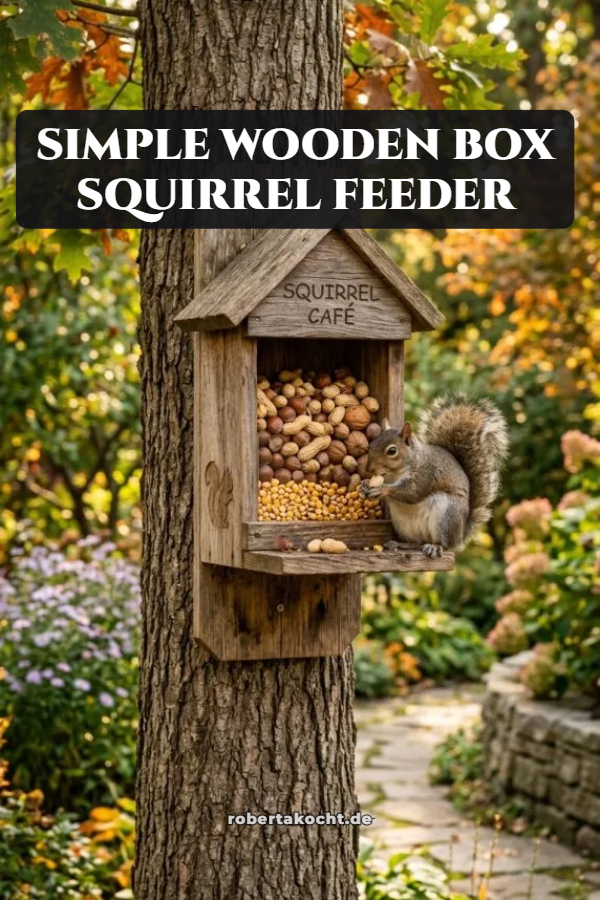
Start by cutting wood into six pieces to form a small box shape. Sand all edges to avoid sharp surfaces. Assemble the box using nails or screws, leaving one side open or partially open so squirrels can access the food easily. You can add a small roof on top to protect food from rain. If you want a more advanced version, attach a hinge on the roof so it can open for refilling.
Place the feeder on a tree trunk or fence at a safe height. Fill it with nuts, corn, or seeds.
Pinterest Style Pattern Idea
A rustic wooden feeder with a farmhouse look, mounted on a tree with squirrels climbing naturally. Add engraved patterns or burnt wood design for aesthetic appeal. This style fits well in minimalist garden themes.