Organizing a kids’ wardrobe is one of those home tasks that looks simple but quickly becomes overwhelming in daily life. Children’s clothes are constantly changing with growth, seasons, school requirements, and daily activity needs. Without a proper system, wardrobes can turn into cluttered spaces filled with mixed uniforms, missing socks, and clothes that no longer fit. This not only creates stress for parents but also makes it harder for kids to develop independence in getting dressed.
A well-organized kids’ wardrobe does more than just keep clothes neat. It builds structure, saves time during busy mornings, and helps children learn responsibility. When everything has a fixed place, kids can easily find what they need without constantly asking for help. This improves confidence and encourages self-management from an early age.
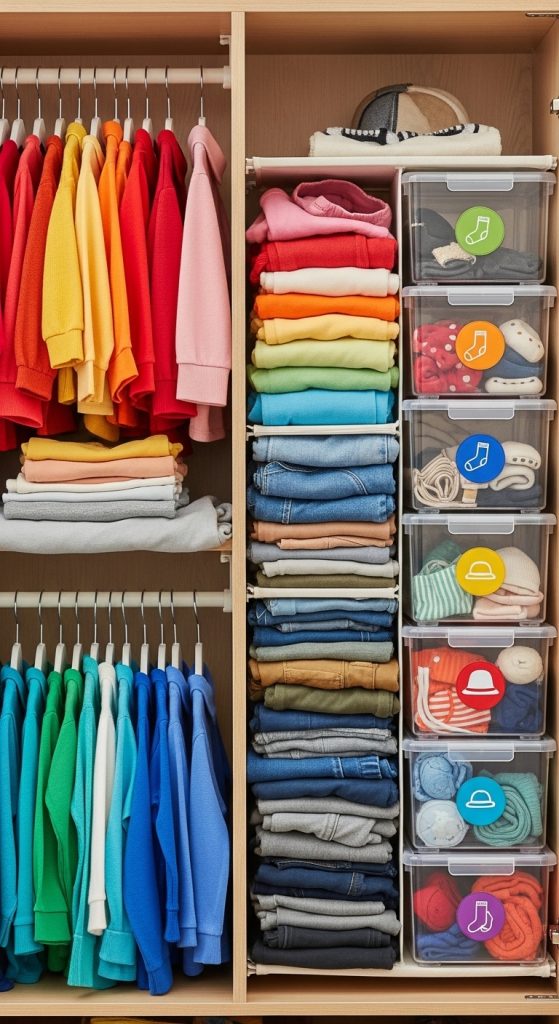
Another major benefit of wardrobe organization is maintaining clothing quality. Proper folding, hanging, and storage prevent wrinkles, damage, and unnecessary wear. It also helps parents track what clothes are available, what needs washing, and what has been outgrown.
In this blog, we will explore 10 practical and creative Kids Wardrobe Organization Ideas that are easy to apply in any home. Whether you have a small space or a large wardrobe, these ideas will help you design a system that is functional, visually clean, and easy for children to maintain. Each idea focuses on simplicity, accessibility, and aesthetic appeal, making your child’s wardrobe both organized and Pinterest-worthy.
Materials Used for Kids Wardrobe Organization (≈300 words)
Before setting up an organized kids’ wardrobe system, having the right materials makes a huge difference. These tools help create structure, improve accessibility, and ensure long-term cleanliness and order.
One of the most important materials is storage bins. These can be plastic, fabric, or woven baskets depending on your home style. Clear bins are especially useful because they allow you to see what is inside without opening them. Labelled bins work even better for separating clothes by category such as uniforms, casual wear, or sportswear.
Hangers are another essential item. Slim, non-slip hangers help maximize wardrobe space while keeping clothes wrinkle-free. Color-coded hangers are also helpful if multiple children share a wardrobe area.
Drawer organizers and dividers are very important for small clothing items like socks, underwear, ties, and accessories. Without dividers, drawers easily become messy and disorganized.
Labels are a key part of any organization system. Whether printed or handwritten, labels help children understand where each item belongs. This builds independence and encourages them to maintain order.
Hanging shelves, hooks, and closet organizers are useful for maximizing vertical space. These tools are especially helpful in smaller rooms where storage is limited.
You may also need laundry baskets to separate clean and dirty clothes. Having a dedicated space for dirty laundry prevents mixing and keeps wardrobes tidy.
Lastly, a weekly outfit planner board can help organize clothes in advance, reducing morning confusion.
Together, these materials form the foundation of a functional, child-friendly wardrobe system that is both practical and visually appealing.
How to Organize a Kids Wardrobe (≈300 words)
Organizing a kids’ wardrobe begins with a complete reset. Start by emptying the entire wardrobe so you can clearly see everything that is available. This step helps identify duplicate items, missing pieces, and clothes that no longer fit.
Next, sort all clothing into categories. Divide items into groups such as school uniforms, casual wear, sportswear, seasonal clothes, and accessories. This makes it easier to plan storage zones inside the wardrobe.
After sorting, declutter unnecessary items. Remove clothes that are too small, damaged, or rarely used. Kids grow quickly, so regular decluttering is essential to maintain space and order.
Once sorting is done, assign specific areas in the wardrobe for each category. For example, uniforms can be hung at eye level for easy access, while seasonal clothes can be placed in upper shelves or storage bins.
The next step is labeling and organizing. Use bins, dividers, and hangers to keep each category separated. Make sure everything has a fixed place so it can be easily returned after use.
Accessibility is very important. Place daily-use clothes where children can easily reach them. This helps them get dressed independently and reduces morning stress for parents.
Finally, establish a routine. Encourage kids to put clothes back in their proper place every day and prepare outfits in advance for school.
With consistency, this system turns a messy wardrobe into a clean, structured, and easy-to-maintain space.
10 Kids Wardrobe Organisation Ideas
1. Color-Coded Wardrobe System
A color-coded wardrobe system is one of the simplest yet most effective ways to organize kids’ clothing. This method assigns specific colors to different categories or even to each child, making it easy to identify and manage clothes quickly.
For example, blue hangers and bins can represent school uniforms, while green can be for casual wear and yellow for sports outfits. In families with multiple children, each child can also have a dedicated color system. This eliminates confusion and makes shared wardrobes much easier to manage.
Inside the wardrobe, each section follows the same color logic. Clothes are hung or stored according to their assigned color category. This creates a visually structured system that is easy for children to understand, even if they cannot read labels yet.
One of the biggest advantages of this system is independence. Kids can quickly identify where their clothes belong and take responsibility for keeping things organized. It also speeds up morning routines since everything is visually grouped.
From a design perspective, a color-coded wardrobe looks clean, modern, and aesthetically pleasing. It creates a sense of order and harmony that is both functional and stylish.
To maintain this system, consistency is key. Once colors are assigned, they should remain the same across all storage items. With proper maintenance, this system can transform a chaotic wardrobe into a beautifully organized space.