Spread the love

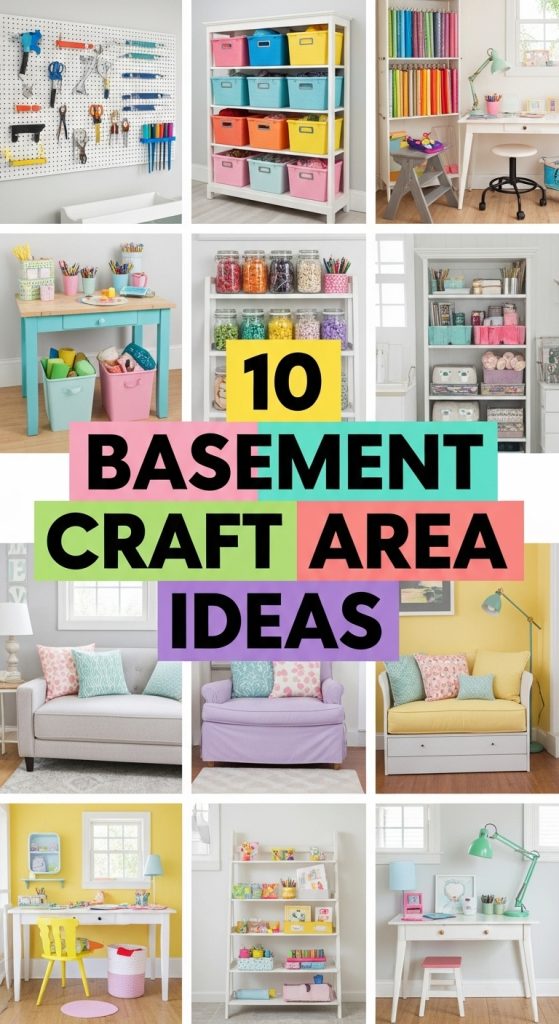
Transforming your basement into a craft area unlocks endless creative possibilities. With proper planning, this underutilized space can become a functional, inspiring hub for DIY projects, art, and hobbies. Below are ten innovative ideas to design a basement craft area that combines practicality with aesthetic appeal. From modular workstations to clever storage solutions, these tips will help you maximize your space and creativity.
1. Modular Craft Workstations for Flexibility

Modular workstations adapt to various projects, making them ideal for multi-purpose craft spaces. Use adjustable tables, rolling carts, and stackable storage to customize layouts. Include magnetic boards or pegboards for tool organization. This setup ensures easy reconfiguration for sewing, painting, or scrapbooking. Opt for lightweight furniture to maintain flexibility as your creative needs evolve.

2. Vertical Storage for Small Spaces

Maximize vertical space with wall-mounted shelves, pegboards, and hanging baskets. Install floating shelves above workstations for jars of buttons, thread, or paintbrushes. Use labeled bins to store fabrics, papers, and tools. Vertical storage minimizes clutter and keeps essentials within arm’s reach, ideal for compact basements.

3. Bright Lighting Solutions

Basements often lack natural light, so layer ambient, task, and accent lighting. Use LED strip lights under shelves for a modern glow. Add adjustable desk lamps for detailed work. Warm white bulbs reduce eye strain. Mirrors or metallic decor can amplify light for a brighter workspace.

4. Cozy Seating with Ergonomic Designs

Prioritize comfort with cushioned chairs, ottomans, or padded benches. Choose ergonomic options to support posture during long crafting sessions. Add floor pillows for casual seating. Incorporate textures like knit throws or faux rugs to create an inviting atmosphere.

5. Child-Friendly Craft Zones

Designate a low table or corner for kids’ crafts. Use washable mats and easy-to-clean surfaces. Stock child-safe supplies like washable markers and blunt scissors. Install colorful cubbies for toy storage. This area encourages family creativity while keeping messes contained.

6. Pegboard Tool Organization

Pegboards offer customizable storage for scissors, rulers, and ribbons. Use hooks, bins, and magnetic strips to secure tools. Paint the pegboard in bold hues to match your decor. This system keeps supplies visible and accessible without desktop clutter.

7. Repurposed Furniture for Unique Storage

Upcycle vintage dressers, lockers, or cabinets for rustic charm. Paint old desks in vibrant colors for a pop of personality. Use drawers for sorting yarn, beads, or stickers. Repurposed items add character while reducing costs.

8. Themed Craft Corners

Assign zones for specific hobbies, like a sewing nook or pottery station. Use themed decor, such as botanical prints for a nature-inspired area. Dedicated zones streamline workflows and keep specialized tools organized.

9. Wall-Mounted Art Display

Install clipboards, wire grids, or corkboards to showcase finished projects. Rotate displays to keep the space fresh. This adds inspiration and celebrates accomplishments. Use fairy lights or frames to highlight favorite pieces.

10. Soundproof Your Creative Space

Add acoustic panels or thick rugs to dampen noise. Weatherstrip doors to minimize sound transfer. Install a white noise machine or Bluetooth speaker for calming playlists. Soundproofing ensures focus and reduces disturbances for others in the home.


Spread the love

By admin

Leave a Reply

Your email address will not be published. Required fields are marked *