As kids grow older and begin to tackle more challenging schoolwork, having a designated homework area can make a world of difference. A well-designed homework room can help them stay focused, organized, and inspired to do their best work. Whether you’re working with a small space or a dedicated room, creating a study area that’s both functional and fun is key to ensuring your child is comfortable and motivated.
In this blog post, we’ll explore 10 creative kids homework room ideas that will help you design a space that enhances productivity while maintaining a playful, inviting atmosphere. These ideas are adaptable for any size room and can be personalized to suit your child’s needs and interests. Let’s dive into some practical and aesthetic homework room ideas that your kids will love!
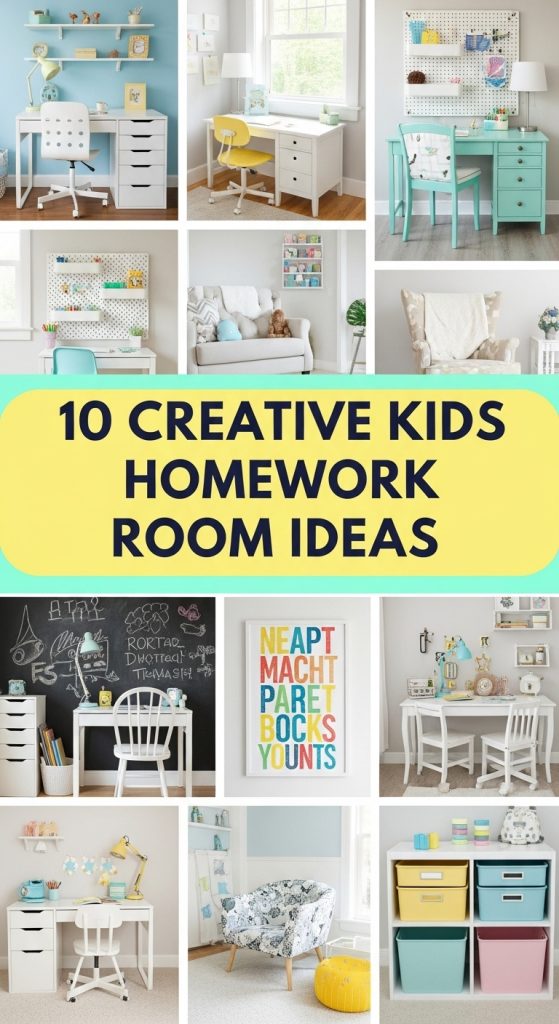
1. Bright and Colorful Study Corner: Spark Creativity and Energy
One of the simplest yet most effective ways to create an engaging homework space is by introducing bright and cheerful colors. A study corner that’s filled with vibrant hues can help keep your child energized and excited about studying.
Key Features:
- Vivid Colors: Use bold colors like yellow, red, or blue to inspire creativity and focus. Choose a color palette that isn’t overwhelming but adds a sense of fun.
- Motivational Wall Art: Hang posters, charts, or bulletin boards with inspirational quotes or educational visuals to keep your child motivated.
- Adequate Lighting: A good study corner requires proper lighting, preferably natural light, which can be enhanced by task lamps or LED lights to create a bright, energetic atmosphere.
By placing the desk in a corner, you can also maximize the available space while giving your child a cozy nook to concentrate on homework.
2. Minimalist Homework Nook: Keeping It Simple and Efficient
Minimalism is all about removing clutter and distractions, making it an ideal choice for a homework nook. A minimalist approach to the study area helps children focus on their work without unnecessary visual distractions.
Key Features:
- Clean Desk Space: Keep the desk simple with just the essentials—such as a laptop or notebook—so the child isn’t overwhelmed by objects. Consider a desk with built-in storage for keeping things organized.
- Neutral Color Palette: Use soft, neutral colors like white, light gray, or pastel shades for walls and furniture. This creates a calm environment conducive to concentration.
- Functional Lighting: A sleek, adjustable desk lamp can provide focused light without taking up too much space.
This minimalist approach not only helps reduce clutter but also promotes an organized and functional space that encourages concentration.
3. Creative Learning Space: Fun and Functional
For kids who love to be creative, having a dedicated space for both learning and art can make homework more enjoyable. You can create a homework room that doubles as a creative learning space where kids can engage with both their academic work and artistic projects.
Key Features:
- Art Supplies Storage: Include shelves or drawers for organizing art supplies, like markers, crayons, and sketchpads. This allows your child to easily switch between creative activities and studying.
- Flexible Desk Space: Consider a spacious desk that can be used for both writing assignments and craftwork. A foldable or adjustable desk offers versatility.
- Playful Decor: Use elements that stimulate creativity, such as educational posters, playful rugs, and colorful accessories. A large chalkboard or corkboard can be used for jotting down reminders or showcasing creative work.
This setup allows your child to explore various interests while maintaining an environment that fosters learning and fun.
4. Ergonomic Desk for Kids: Promoting Comfort and Posture
Comfort is key when it comes to long study sessions. An ergonomic desk ensures that your child maintains proper posture, preventing back or neck strain during homework time. Investing in ergonomic furniture promotes health and helps your child feel comfortable throughout their study time.
Key Features:
- Adjustable Desk and Chair: Opt for furniture that grows with your child. Adjustable desks and chairs allow you to tailor the height to your child’s needs, supporting good posture.
- Lumbar Support: Choose a chair with built-in lumbar support to provide proper lower back support while sitting for extended periods.
- Ergonomic Accessories: Use accessories such as wrist rests for the keyboard or writing pad to ensure that your child’s body remains comfortable during study sessions.
By making the homework area ergonomic, you are ensuring that your child can study comfortably without straining their body.
5. Organized Study Room with Built-In Shelves: Maximize Storage Space
A cluttered study area can be distracting. By incorporating built-in shelves or cabinets, you can create a tidy, organized space where your child can easily store school supplies, books, and other essentials.
Key Features:
- Custom Shelving: Built-in shelves allow you to make the most of vertical space while keeping the floor area clear. You can store books, binders, and craft supplies neatly on the shelves.
- Integrated Desk Drawers: A desk with multiple drawers helps keep pens, papers, and notebooks out of sight but within reach.
- Storage Bins and Containers: Use storage bins or baskets to organize smaller items. Labeling the containers can help your child quickly find what they need.
An organized study room promotes a sense of order and helps children focus on their tasks without being distracted by clutter.
6. Themed Homework Room: Personalize with Fun Themes
A themed homework room allows you to create a space that’s not only functional but also inspiring for your child. Whether your child loves space, animals, or nature, incorporating a theme into their homework area can make studying feel more exciting.
Key Features:
- Wall Murals or Decals: Choose wall murals or decals that reflect your child’s interests, such as outer space designs or nature-inspired imagery. This adds a personal touch to their study space.
- Themed Desk Accessories: Look for themed desk accessories, such as pencil holders, lamps, and stationery that match the room’s theme. You can even incorporate a themed rug or curtains.
- Educational Posters: Use posters that tie into the theme, such as space facts, animal charts, or geography maps.
A themed room not only makes homework fun but also encourages learning through the integration of educational visuals and interactive designs.
7. Multifunctional Study Room: Homework Meets Playtime
If you’re working with a small space, consider creating a multifunctional study room. This room should serve as both a homework area and a place for your child to relax and play. By combining work and play, you can create a room that’s both productive and enjoyable.
Key Features:
- Convertible Furniture: Opt for furniture that can serve multiple purposes. For example, a foldable desk that can be stowed away when not in use, or a chair that doubles as a reading nook.
- Separate Zones: Create distinct zones for work and play. A small desk area for homework can be complemented by a cozy reading corner or a play area with soft mats.
- Storage Solutions: Invest in storage options that help keep the room tidy, such as a toy chest or baskets to keep books and games organized.
A multifunctional study room offers flexibility and makes the most of the available space, ensuring that both work and leisure can coexist comfortably.
8. Tech-Friendly Homework Room: Integrating Technology for Learning
In today’s digital age, many kids use technology as part of their homework routine. A tech-friendly homework room ensures that your child has access to the necessary devices while maintaining a clutter-free workspace.
Key Features:
- Integrated Tech Setup: Ensure that the desk is equipped with space for a computer or tablet, charging stations, and organizational trays for wires and cables.
- Monitor Stands and Desk Organizers: Use monitor stands to raise the screen to eye level and desk organizers to keep tech accessories like headphones, mouse, and chargers in order.
- Smart Lighting: Consider installing smart lighting that can be adjusted based on the time of day or the task at hand. Soft, warm lighting is ideal for reading, while bright lights are perfect for typing and focusing.
By integrating technology seamlessly into the homework room, you create an efficient and modern learning environment for your child.
9. Incorporating Natural Elements: Bringing the Outdoors In
Adding natural elements to the homework room can help your child feel more relaxed and connected to their environment. Plants, natural wood furniture, and plenty of natural light can make the space feel calm and refreshing.
Key Features:
- Indoor Plants: Choose low-maintenance plants such as succulents or ferns to place on the desk or shelves. They not only add a touch of greenery but also improve air quality.
- Wooden Furniture: Incorporate wooden furniture, such as a wooden desk or bookshelf, for a natural, calming vibe. Wood is warm and timeless, creating a cozy atmosphere.
- Natural Light: Position the desk near a window to take advantage of natural light. If that’s not possible, consider adding natural light lamps or skylights.
Natural elements not only improve the aesthetic of the homework room but also help promote focus and relaxation, making it easier for kids to engage with their schoolwork.
10. Adjustable Desk Heights: Growing with Your Child
As kids grow, their furniture needs may change. Adjustable desks are a great investment because they can be raised or lowered to accommodate your child’s changing height. This flexibility ensures that the desk remains comfortable and ergonomic throughout the years.
Key Features:
- Height Adjustable Desk: Look for desks that can be raised or lowered, allowing the child to stand or sit while working. This promotes better posture and comfort during study sessions.
- Ergonomic Chair: Pair the adjustable desk with an ergonomic chair that can also be adjusted to fit your child’s size. This ensures that their posture remains healthy.
- Space for Growth: As your child’s needs change, an adjustable desk grows with them, offering the flexibility to adapt the space for different learning activities.
Adjustable desks are a practical and long-term solution for growing kids, allowing them to use the homework space comfortably as they age.
Conclusion
Creating the perfect kids’ homework room requires a thoughtful blend of functionality, comfort, and creativity. By incorporating these 10 ideas, you can design a space that encourages focus, sparks creativity, and makes studying a more enjoyable experience for your child. Whether you choose a bright and colorful study corner, an ergonomic desk, or a multifunctional room, the goal is to create a space that caters to your child’s unique needs while maintaining a sense of fun and comfort. Remember, the right environment can inspire your child to perform their best, making homework feel less like a chore and more like an opportunity for growth.
By personalizing the space with functional furniture, organizational tools, and a touch of creativity, you can help set your child up for success both academically and personally.
This blog post can be expanded further by adding specific product recommendations, tips for budgeting the space, or even insights from educational psychologists on the importance of a well-designed homework area for kids.


