Sliding glass doors are architectural centerpieces in modern homes, bridging interior living areas with sunlit patios, lush gardens, and scenic outdoor views. However, dressing these wide glass expanses presents unique functional challenges. Standard window treatments often fail when applied to high-traffic sliding doors—heavy draperies can catch in tracks, ill-fitted panels block pathways, and flimsy fabrics offer poor thermal insulation against seasonal drafts and intense sun glare.
Modern window treatment design has moved far beyond dated vertical plastic blinds and single-rod drapes. Today’s best sliding door treatments combine effortless lateral gliding, flexible light filtration, high thermal efficiency, and stylish visual layering. Whether managing strong afternoon sun, seeking complete evening privacy, or aiming to visually heighten a room with floor-to-ceiling drapes, choosing the right curtain hardware and fabric profile is essential for both daily convenience and long-term durability.
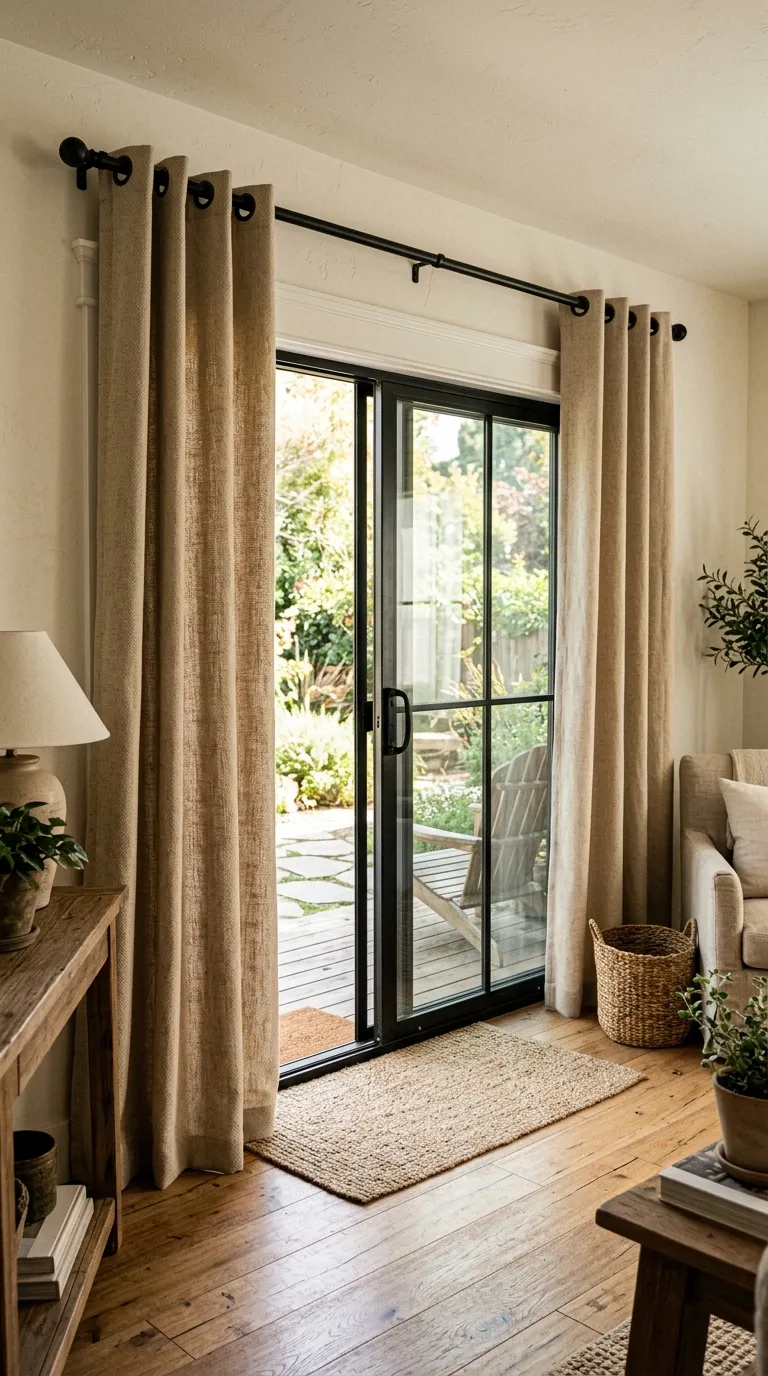
Navigating these treatments requires balancing track mechanisms, stack-back width clearances, moisture-resistant fibers, and smart heading styles. From floor-to-ceiling ripple-fold tracks and double-rod day-to-night sheer combinations to modern sliding panel tracks and insulated thermal weaves, this guide provides a complete design blueprint. Below are essential measuring rules, hardware setups, ten distinct curtain ideas, and expert maintenance strategies to elevate your sliding glass doors.
Why This Idea Is Trending & Flattering
Upgrading sliding glass doors with intentional, well-engineered curtain systems is a leading interior trend that provides immediate practical and visual benefits:
-
Visual Ceiling Elevation: Mounting curtain tracks or rods high above the doorframe (near the ceiling line) and letting panels kiss the floor creates a strong vertical line that makes standard ceilings feel taller and rooms more spacious.
-
Thermal Insulation & Energy Savings: Large glass expanses are major sources of heat loss in winter and solar heat gain in summer. High-density linen weaves, lined drapes, and thermal fabrics significantly reduce energy bills by insulating the glass boundary.
-
Light Filtering & Glare Control: Layering sheer panels with opaque drapes allows you to filter harsh daylight into a soft, diffused glow without completely obstructing outdoor views or losing privacy.
-
Effortless High-Traffic Functionality: Dedicated sliding tracks and smart stack-back configurations ensure fabric panels slide smoothly to one side, keeping doorways fully accessible for children, pets, and entertaining.
-
Acoustic Softening: Expansive glass and open-concept hard flooring create echo-prone rooms. Plush, textured drapery absorbs sound waves, immediately improving room acoustics and creating a cozy, quiet atmosphere.
Materials, Preparation & Hardware Setup Guide
Dressing a wide sliding door requires structural planning, proper hardware selection, and accurate measuring to ensure smooth operation.
Essential Hardware & Fabric Components
-
Heavy-Duty Ceiling-Mounted Traverse Tracks: Aluminum gliding tracks that conceal rolling gliders, allowing wide, heavy curtain panels to glide effortlessly with a single wand pull.
-
Double Curtain Rods (1 to 1.5-inch diameter): Sturdy steel or brass dual-bracket systems designed to support both a front blackout/privacy drape and an inner sheer layer.
-
Baton / Wand Pulls: Clear acrylic, stainless steel, or wooden draw wands attached directly to the leading edge of curtain gliders, keeping hands off delicate fabrics to prevent oils and dirt transfer.
-
Performance Linen & Poly-Blend Fabrics: Dimensionally stable fabrics that resist stretching, shrinking, and UV sun damage over time.
-
Blackout / Thermal Liners (3-Pass Coating): Specialized backing fabrics that block 100% of light while providing thermal resistance and acoustic insulation.
-
Heavy-Duty Anchors & Stud Fasteners: Robust toggle bolts or heavy-duty zinc drywall anchors to support the cumulative weight of wide drapery panels spanning 8 to 12 feet.
Measuring, Stack-Back & Installation Rules
-
Calculate Adequate Stack-Back Clearance: The “stack-back” is the total width of the curtain fabric when fully drawn open. Add 20% to 30% of the door’s total width to your curtain rod or track length, extending it past the doorframe so the stacked fabric clears the glass entirely when open.
-
Mount High and Wide: Install your track or rod 4 to 8 inches above the doorframe (or directly at the ceiling molding) and extend it 6 to 12 inches past each side of the frame to maximize natural light and visual scale.
-
Set Floor Clearance Precision: For high-traffic sliding doors, curtains should hover exactly 0.5 inches above the finished floor, or lightly touch the floor (a “kiss” break). Avoid deep floor puddling (1 to 3 inches), as trailing fabric collects dust, catches in door tracks, and poses a tripping hazard.
-
Coordinate Stack Direction with Door Movement: Always configure single-draw panels to stack on the stationary glass side of the door, keeping the sliding glass panel completely clear when opened.
Main Ideas & Style Variations
| Curtain Concept | Core Mechanism / Heading | Best Suited Style |
| Floor-to-Ceiling Ripple-Fold Traverse Track | S-fold architectural track gliders | Modern Minimalist & Contemporary |
| Double-Rod Sheer & Thermal Blackout Layer | Dual-bracket rod with rings | Transitional, Traditional & Family Living |
| Natural Slub Linen with Pinch-Pleat Heading | French three-finger pleats on rings | Modern Organic & Coastal |
| Japanese Sliding Panel Track Blinds | Flat fabric sliding panels on multi-channel rail | Japandi, Urban & Minimalist |
| One-Way Single Draw Baton Wand Drape | Smooth lateral single-side stack | Asymmetrical sliding door openings |
| Crisp White Sheer Voile with Ceiling Track | Continuous diffuse sheer wave | Scandinavian & Modern Spa |
| Grommet-Top Textured Cotton Canvas | Matte black metal eyelets on thick rod | Industrial, Modern Farmhouse & Rustic |
| Inset Roman Shades with Framing Drapes | Hybrid fabric shade + stationary side drapes | French Country & Classic Traditional |
| Motorized Smart-Home Automated Drapery | App/Voice-controlled motorized track | Luxury Modern & Smart Homes |
| High-Contrast Color-Block Linen Drapes | Two-tone tailored pleated panels | Mid-Century Modern & Eclectic |
1. Floor-to-Ceiling Ripple-Fold Traverse Track
Concept Overview & Aesthetic Appeal
Ripple-fold drapery (also known as S-curve or wave-fold) is the gold standard for contemporary sliding doors. Fabric hangs suspended from a sleek, ceiling-recessed track, holding continuous, perfectly uniform S-shaped ripples whether open or closed. It delivers an architectural, hotel-grade finish that emphasizes clean lines and vertical height.
Step-by-Step Execution & Installation Guide
-
Mount a slim, white aluminum ripple-fold traverse track directly to the ceiling, spanning 12 inches past each side of the doorframe.
-
Connect snap tape along the upper header of your drapery panels to maintain consistent 100% or 120% ripple fullness.
-
Snap the curtain carriers into the linked nylon track gliders.
-
Attach a clear 36-inch acrylic wand pull to the leading carrier for effortless opening and closing.
-
Adjust the hem so the panels hover 0.5 inches above the floor for clean, uninterrupted glide.
Pro Styling & Everyday Application Tips
-
Choose medium-weight polyester-linen blends in ivory, warm taupe, or soft grey that hold their wave structure without sagging.
-
Recessing the track into a shallow ceiling drywall pocket creates a seamless look where fabric cascades directly out of the ceiling.
2. Double-Rod Sheer & Thermal Blackout Layer
Concept Overview & Aesthetic Appeal
A versatile dual-layer system combining an interior sheer panel with an exterior heavy thermal drape. During the day, the sheer layer diffuses direct sunlight and provides daytime privacy while maintaining outdoor views. At night, drawing the thermal blackout drape seals the room against cold drafts and blocks exterior light.
Step-by-Step Execution & Installation Guide
-
Install heavy-duty double-rod brackets 6 inches above the sliding doorframe, anchored securely into wall studs.
-
Place a 3/4-inch rod on the inner rear bracket holding lightweight, airy sheer linen panels.
-
Mount a sturdy 1.25-inch decorative metal rod on the outer front bracket holding lined thermal blackout curtains.
-
Ensure a 3-inch gap between the inner and outer rods to prevent panels from catching on each other when sliding.
-
Hang both layers using quiet-glide curtain rings with interior nylon inserts for smooth, silent operation.
Pro Styling & Everyday Application Tips
-
Pair a warm natural linen sheer with a rich charcoal, olive, or deep navy outer drape for tailored color contrast.
-
Pull the outer blackout drapes to the sides using decorative brass wall holdbacks during daytime hours to frame the sheers.
3. Natural Slub Linen with Pinch-Pleat Heading
Concept Overview & Aesthetic Appeal
Pinch-pleated drapery (such as classic three-finger French pleats) brings tailored elegance and organic texture to sliding patio doors. The structured top header gathers the fabric into tight, even folds that drape smoothly down to the floor, pairing well with warm wood furniture and coastal spaces.
Step-by-Step Execution & Installation Guide
-
Mount a 1.25-inch brushed brass or matte black decorative rod 8 inches above the door trim.
-
Insert metal drapery pin hooks into the back of each stitched pinch pleat at equal heights.
-
Hook the pins into decorative metal rings fitted with nylon inner glide strips.
-
Set the total rod width 16 inches wider than the doorframe to accommodate the stacked pleats when open.
-
Steam the hanging linen thoroughly to encourage relaxed, natural folds.
Pro Styling & Everyday Application Tips
-
Choose unbleached, raw-slub linen with subtle organic slubs for an artisanal texture that filters daylight softly.
-
Use a handheld steamer and clip weights to the bottom hem for 48 hours to “train” the linen to fall into straight, uniform folds.
4. Japanese Sliding Panel Track Blinds
Concept Overview & Aesthetic Appeal
A sleek alternative to traditional gathered drapery, panel track systems use wide, flat fabric panels that glide smoothly across a multi-channel ceiling rail. When closed, the panels create a clean, minimalist fabric screen; when open, they stack neatly behind one another, minimizing stack-back bulk over wide glass expanses.
Step-by-Step Execution & Installation Guide
-
Mount a 4- or 5-channel aluminum track directly to the ceiling or upper wall header above the sliding door.
-
Attach wide, flat fabric panels (typically 20 to 24 inches wide each) to the sliding carriers using hook-and-loop fastener strips.
-
Insert bottom aluminum weight bars into the lower hem of each panel to keep the fabric taut and wrinkle-free.
-
Connect a lateral draw wand to slide the panels open in sequence toward the stationary side of the door.
-
Test movement to ensure panels glide past each other without friction.
Pro Styling & Everyday Application Tips
-
Select semi-opaque woven paper, bamboo matchstick fabric, or textured fiberglass weaves to enhance a Japandi or modern urban look.
-
Panel tracks are ideal for tight rooms where gathered drapes would take up too much interior floor space.
5. One-Way Single Draw Baton Wand Drape
Concept Overview & Aesthetic Appeal
Most sliding glass doors open from one side (either left-to-right or right-to-left). A one-way single draw curtain system matches this asymmetry: the entire curtain panel draws smoothly to one side, stacking completely against the fixed glass panel and leaving the operable doorway open.
Step-by-Step Execution & Installation Guide
-
Install a heavy-duty one-way traverse rod or ceiling track that glides toward the stationary side of the door.
-
Attach a single, continuous, extra-wide drapery panel across the carriers.
-
Fasten a rigid 48-inch metal or acrylic baton wand to the leading master carrier.
-
Ensure the track extends at least 14 to 18 inches past the stationary side of the door to hold the stacked fabric off the glass.
-
Verify that pulling the wand draws the entire curtain across the opening in one smooth motion.
Pro Styling & Everyday Application Tips
-
This setup avoids the awkwardness of center-parted drapes, where one half constantly obstructs the sliding door opening.
-
Choose lightweight, structured fabrics like poly-cotton blends that compress into a slim stack profile.
6. Crisp White Sheer Voile with Ceiling Track
Concept Overview & Aesthetic Appeal
For rooms prioritizing an open, breezy atmosphere, a full wall of continuous white sheer voile creates a soft, luminous room divider. Spanning the entire width of the wall rather than just the door frame, it turns the sliding door zone into a light-diffusing feature.
Step-by-Step Execution & Installation Guide
-
Install a continuous ceiling track extending across the entire wall containing the sliding door.
-
Hang extra-wide, double-fullness (200% fullness) white sheer voile or batiste panels.
-
Use quiet-gliding ball-bearing carriers to allow smooth movement across the wide track.
-
Adjust the bottom hem to hover 1/4 inch above the floor for a floating appearance.
-
Steam out all shipping creases for a smooth, uniform drape.
Pro Styling & Everyday Application Tips
-
Full-wall sheers disguise awkward off-center sliding door placements by creating a continuous, balanced backdrop.
-
Pair with warm LED cove lighting along the ceiling track to create an ambient, glowing curtain wall at night.
7. Grommet-Top Textured Cotton Canvas
Concept Overview & Aesthetic Appeal
Grommet-top (eyelet) curtains provide a casual, modern farmhouse or industrial look. Large metal eyelets punched into the top header slide directly along a thick metal rod, forming wide, deep folds that operate without hooks, clips, or complex track systems.
Step-by-Step Execution & Installation Guide
-
Mount a sturdy 1.5-inch diameter matte black or gunmetal steel curtain rod 6 inches above the door.
-
Thread the metal grommet rings of the curtain panels onto the rod, alternating forward and backward folds.
-
Ensure the rod brackets are positioned outside the doorframe so the grommets can slide freely past the door opening.
-
Apply a thin layer of dry silicone lubricant spray along the top of the rod for smooth metal-on-metal sliding.
-
Set the panels to frame the door neatly when open.
Pro Styling & Everyday Application Tips
-
Match grommet metal finishes (matte black, brushed nickel, antique bronze) to your sliding door hardware and light fixtures.
-
Choose heavy textured cotton duck, canvas, or linen-look weaves that hold deep folds naturally.
8. Inset Roman Shades with Framing Drapes
Concept Overview & Aesthetic Appeal
A hybrid treatment pairing individual Roman shades mounted over each glass door panel with stationary floor-length drapery panels flanking the sides. The Roman shades provide adjustable height-level light control, while the side drapes frame the door and add softness.
Step-by-Step Execution & Installation Guide
-
Mount two matching custom flat-fold Roman shades either inside the window recess or directly to the upper trim above each door panel.
-
Install a stationary decorative curtain rod 8 inches above the door trim, extending 12 inches past each side.
-
Hang two stationary pinch-pleated drapery panels on the outer ends of the rod to frame the doorway.
-
Ensure the Roman shade over the active sliding door is raised to clear head height when the door is in use.
-
Coordinate fabrics between the shades and side panels for a cohesive look.
Pro Styling & Everyday Application Tips
-
Use a patterned botanical or geometric print on the Roman shades, paired with solid-colored linen framing drapes.
-
Choose cordless Roman shades with magnetic or motorized lifts for smooth, child-safe operation.
9. Motorized Smart-Home Automated Drapery
Concept Overview & Aesthetic Appeal
The ultimate luxury for modern sliding doors: a motorized traverse track integrated with smart-home systems. Curtains open and close via voice command, smartphone apps, or automated schedules linked to sunrise, sunset, or room temperature sensors.
Step-by-Step Execution & Installation Guide
-
Mount a motorized track rail to the ceiling or upper wall, positioning the compact motor housing on the stationary door side.
-
Connect the motor to a nearby power outlet or install a rechargeable, high-capacity lithium battery pack.
-
Attach the drapery panels to the master drive belt carriers using ripple-fold or pinch-pleat headings.
-
Pair the motor with your smart-home hub (e.g., Apple Home, Google Home, Amazon Alexa) using Wi-Fi or Zigbee protocols.
-
Program open/close limit positions and daily schedules.
Pro Styling & Everyday Application Tips
-
Set automated schedules to close heavy thermal drapes during hot summer afternoons to reduce cooling costs automatically.
-
Hide the motor behind the leading edge of the drapery header for a clean, wire-free finish.
10. High-Contrast Color-Block Linen Drapes
Concept Overview & Aesthetic Appeal
Make a graphic statement by incorporating two-tone color-blocked drapery panels. Featuring a light, neutral tone on the upper two-thirds and a rich, grounding accent color (such as rust, forest green, or charcoal) along the bottom third, this design anchors the room and adds visual weight to the lower wall.
Step-by-Step Execution & Installation Guide
-
Commission or sew custom two-tone linen panels, placing the horizontal color transition 30 to 36 inches from the bottom hem.
-
Sew a tailored French pinch-pleat header along the top edge of the upper neutral fabric.
-
Mount a matte black or brass curtain rod 8 inches above the door casing.
-
Hang the panels using matching metal rings with nylon gliders.
-
Align the horizontal color-block seam across all panels for visual consistency.
Pro Styling & Everyday Application Tips
-
The darker bottom band is practical: it hides accidental dirt, pet hair, and floor scuffs along high-traffic doorways.
-
Match the bottom band color to nearby accent furniture, rugs, or throw pillows to tie the room together.
Common Beginner Mistakes & How to Avoid Them
-
Choosing Floor-Puddling Lengths on Active Doors: Puddling drapery fabric (1 to 3 inches on the floor) looks romantic in photos, but on high-traffic sliding doors, it gathers dust, gets caught in sliding tracks, and quickly becomes dirty. Solution: Hang curtains so they hover 0.5 inches above the floor or lightly “kiss” the surface.
-
Underestimating Stack-Back Clearance: Installing a rod that only spans the exact width of the doorframe means drawn curtains will cover 20% to 30% of the glass, blocking daylight and obstructing the doorway. Solution: Extend tracks and rods 12 to 18 inches beyond the doorframe so open drapes rest completely against solid wall space.
-
Using Center-Split Curtains on Asymmetrical Doors: Hanging curtains that split in the middle leaves fabric hanging directly across the active sliding door opening. Solution: Use a one-way draw configuration that pulls all fabric toward the stationary glass panel.
-
Pulling Curtains by the Fabric Edges: Pulling fabric directly with your hands transfers natural skin oils, dirt, and moisture, leading to stained edges and stretched seams over time. Solution: Attach 36- to 48-inch baton wands to the leading master carriers.
Pro Tips, Maintenance & Longevity Strategies
| Frequency | Maintenance Action | Target Components / Focus |
| Weekly | Lightly dust fabric with a soft vacuum brush attachment | Upper pleats, hems & sliding track channels |
| Monthly | Wipe track channels & apply dry silicone spray | Aluminum tracks, nylon carriers & wheels |
| Semi-Annually | Inspect bracket anchors & tighten wall fasteners | Mounting brackets, rod screws & toggle bolts |
| Annually | Professional dry-clean or gentle steam refresh | Full fabric length, thermal liners & hems |
-
Lubricate Metal and Aluminum Tracks Annually: Spray a light mist of dry PTFE silicone lubricant along track rails to keep carriers rolling quietly and effortlessly.
-
Use Nylon-Lined Curtain Rings: If using decorative rods, always buy metal rings lined with internal nylon strips to eliminate metal-on-metal friction and screeching sounds.
-
Train Your Pleats with Steaming: After hanging new drapery, steam the panels thoroughly from top to bottom, gather them into even folds, and loosely tie them with ribbon for 48 hours to set the drape memory.
-
Select UV-Resistant Fabric Blends: Direct sunlight through large glass doors will fade and weaken pure natural silks and untreated cottons; choose solution-dyed acrylics, polyester-linen blends, or UV-lined fabrics for lasting color.
Styling, Presentation & Lighting Pairings
Elevating a sliding glass door treatment requires integrating the window zone with the surrounding room design:
-
Hardware Finish Coordination: Match your curtain rods and tracks with sliding door handles, light fixtures, and cabinet pulls (e.g., brushed brass, matte black, or polished chrome) for visual harmony.
-
Integrated Ceiling Pelmets and Valance Boxes: Build a shallow wooden or drywall pelmet box along the ceiling to conceal curtain tracks and motor housings, giving the installation a built-in architectural look.
-
Backlit Track Lighting: Install a warm, low-voltage LED strip light inside a ceiling curtain recess to cast a soft, ambient glow down the drapery fabric at night.
-
Complementary Floor Runners: Place a low-pile, washable indoor-outdoor runner rug parallel to the sliding door to catch dirt from outside and visually frame the doorway.
Budgeting & Project Planning
| Project Element | Estimated Cost (USD) | Installation Time Commitment |
| Standard Ready-Made Double-Rod Setup | $80 – $220 | 1 – 2 Hours (DIY installation) |
| Ceiling-Mounted Ripple-Fold Traverse Track | $150 – $350 | 2 – 3 Hours (Precision mounting) |
| Japanese Sliding Panel Track System | $120 – $280 | 1.5 – 2.5 Hours |
| Smart Motorized Track & Drapery System | $350 – $900+ | 2 – 4 Hours (Mounting + App setup) |
| Custom Tailored Pinch-Pleat Linen Drapes | $500 – $1,800+ | 2 – 4 Weeks (Sourcing & fabrication) |
Upgrading sliding door curtains can be achieved across various price points. Utilizing high-quality ready-made linen panels paired with heavy-duty traverse tracks delivers a tailored, designer-grade look for under $300, while custom motorized drapery systems offer automated luxury for larger home renovations.
Creative Expansions & Advanced Inspiration
-
Hidden Ceiling-Pocket Recesses: During a remodel, frame a 4-inch recessed drop pocket in the drywall ceiling above the sliding door so drapery tracks remain completely invisible.
-
Outdoor Weatherproof Patio Curtains: Hang exterior-grade Sunbrella drapery on the outside patio frame to create an outdoor cabana room while blocking heat before it touches the glass.
-
Magnetic Edge-Sealing Channels: Install slim magnetic tape inside the outer curtain hems and wall trim to snap blackout drapes firmly to the wall, eliminating light leaks.
-
Curved Corner-Gliding Tracks: For sliding doors adjoining corner windows, use curved 90-degree traverse tracks that glide continuous drapery around the corner on a single track.
Frequently Asked Questions (FAQs)
-
What is the best type of curtain for sliding glass doors?
Traverse track systems with ripple-fold or pinch-pleat headings are ideal. They slide smoothly across wide spans without catching on center brackets, and draw easily using wand pulls or motorized controls.
-
How far past the sliding door should the curtain rod extend?
Extend the rod or track 12 to 18 inches beyond the doorframe on each side (or at least on the stationary glass side). This ensures the stacked fabric clears the glass opening when fully drawn open.
-
Are grommet curtains good for sliding doors?
Grommet curtains can work for standard spans, but wide sliding doors often require center support brackets that block grommets from sliding all the way across. A traverse track or dedicated sliding panel track is much more practical for daily use.
-
How high should you hang curtains over a sliding glass door?
Hang curtains high—ideally 4 to 8 inches above the door trim or directly below the ceiling molding. This draws the eye upward, making standard 8-foot ceilings appear much taller and creating a clean, elegant look.


