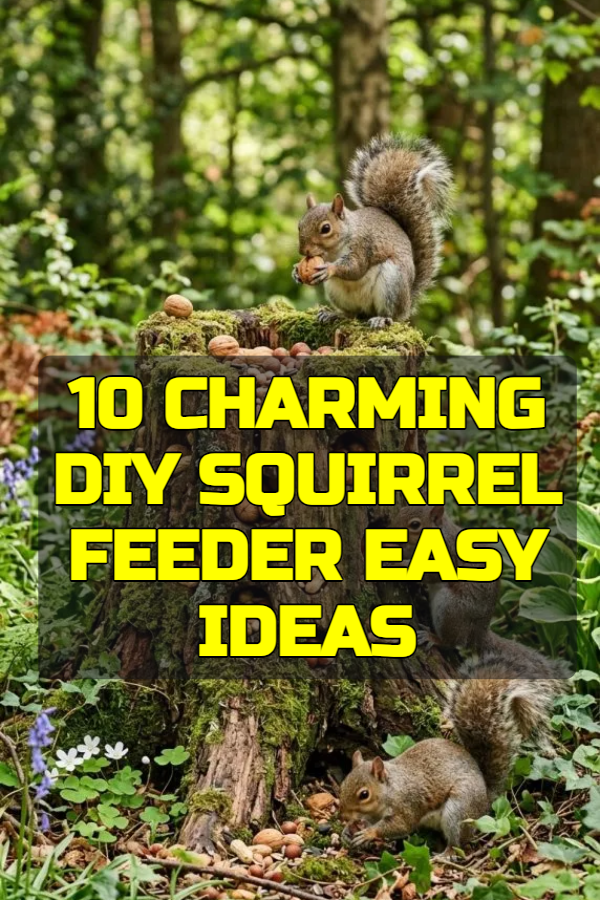
10 DIY Squirrel Feeder Easy Ideas

Spread the love

Squirrels are some of the most entertaining backyard visitors. Their playful behavior, curious nature, and acrobatic movements make them fun to watch, especially when they interact with feeders you’ve built yourself. Creating a DIY squirrel feeder is not only a creative outdoor project but also a way to bring more wildlife activity into your garden without disturbing the natural ecosystem.

Many people think squirrel feeders require advanced woodworking skills or expensive materials, but that’s not true. Most DIY squirrel feeder ideas can be made using simple household items like plastic bottles, wooden scraps, mason jars, or recycled materials. These projects are budget-friendly, eco-conscious, and beginner-friendly. Whether you live in an apartment with a balcony or a house with a backyard, you can easily set up a squirrel feeding station.

Another benefit of making squirrel feeders is that it helps protect bird feeders. Squirrels often raid bird food, so giving them their own dedicated feeding spot keeps both birds and squirrels happy. Plus, it adds a charming rustic or Pinterest-style aesthetic to your outdoor space.

In this guide, you’ll learn 10 easy DIY squirrel feeder ideas that are practical, creative, and visually appealing. Each idea includes materials used, step-by-step instructions, and a Pinterest-style design pattern so you can recreate or customize it based on your garden theme. These ideas focus on simplicity, durability, and attraction value for squirrels.

Let’s start building a backyard space that feels alive, natural, and fun.


General Materials Used for DIY Squirrel Feeders

Before jumping into individual projects, it helps to understand the basic materials commonly used in most squirrel feeder DIY designs. These materials are easy to find and often already available at home.

1. Wood (Pine, Cedar, or Scrap Wood):
Wood is the most common material because it is strong, weather-resistant, and easy to shape. Cedar is especially good for outdoor use since it resists rot.

2. Plastic Bottles & Containers:
Recycled plastic bottles are perfect for gravity feeders. They are lightweight, waterproof, and easy to cut.

3. Mason Jars:
These give a rustic Pinterest-style look and work well for seed storage feeders.

4. Screws, Nails, and Glue:
Used for assembling wooden feeders and ensuring stability.

5. Twine, Rope, or Wire:
Helpful for hanging feeders on trees or balconies.

6. Small Hinges (Optional):
Used for feeders with opening lids.

7. Sandpaper:
Smooths rough edges to make feeders safe for squirrels.

8. Paint or Wood Stain (Optional):
Used for decoration and weather protection. Earthy tones work best for Pinterest-style aesthetics.

9. Seeds, Nuts, and Corn Cobs:
The main food attraction for squirrels—peanuts, walnuts, corn, and sunflower seeds are popular choices.

With these simple materials, you can build almost any squirrel feeder design described below.


1. Classic Wooden Platform Squirrel Feeder

Materials Used: Scrap wood, nails/screws, sandpaper, wood glue, optional wood stain.

How to Make:
A classic platform feeder is one of the easiest and most effective squirrel feeders. Start by cutting a flat wooden base about 8–12 inches wide. Attach four small wooden legs or side rails to keep food in place. Sand all edges to prevent splinters. If you want a polished look, apply a natural wood stain for weather protection. Place the feeder on a tree trunk or mount it on a fence post.

Pinterest Style Pattern:
This design focuses on rustic simplicity. Think farmhouse-style outdoor décor—natural wood texture, minimal paint, and clean structure. It blends beautifully with garden environments and wooden fences.

Why It Works:
Squirrels prefer open feeding spaces where they can easily grab nuts and stay alert for predators. The flat design mimics natural feeding surfaces like tree branches.

Extra Tip:
Place corn cobs or peanuts in a straight line for a visually pleasing Pinterest-style arrangement that attracts squirrels quickly.


2. Mason Jar Gravity Feeder

Materials Used: Mason jar, wooden board, metal clamp, screws, seeds/nuts.

How to Make:
Attach a mason jar upside down or tilted to a wooden base using a clamp. Drill a small opening so seeds slowly flow out. Secure the jar tightly to avoid falling. Fill it with peanuts or sunflower seeds.

Pinterest Style Pattern:
This design is rustic-modern. Glass + wood combination creates a cozy farmhouse aesthetic. It looks beautiful hanging on fences or balcony walls.

Why It Works:
The gravity system ensures a continuous food supply without daily refilling. Squirrels learn quickly to tap and feed from the jar opening.

Extra Tip:
Use labeled mason jars or twine wrapping for extra Pinterest-style decoration.


3. Hanging Corn Cob Feeder

Materials Used: Corn cobs, rope or twine, drill or hook.

How to Make:
Simply drill a hole through a dried corn cob and thread strong rope through it. Tie it securely to a tree branch or hook. You can hang multiple cobs at different heights.

Pinterest Style Pattern:
This is a rustic wildlife-inspired design. Natural golden corn contrasts beautifully with green garden backgrounds, making it highly Pinterest-worthy.

Why It Works:
Corn is a natural squirrel favorite. Hanging it encourages climbing and playful activity.

Extra Tip:
Combine multiple cobs in a vertical hanging chain for a more decorative backyard look.


4. Recycled Plastic Bottle Feeder

Materials Used: Plastic bottle, wooden stick, scissors, string, seeds.

How to Make:
Cut small feeding holes on opposite sides of a bottle. Insert wooden sticks through holes so squirrels can perch. Fill the bottle with seeds and hang it upside down.

Pinterest Style Pattern:
Eco-friendly DIY aesthetic. Transparent bottle shows seeds inside, giving a visually satisfying “feed flow” effect.

Why It Works:
The design dispenses food gradually and keeps it protected from rain.

Extra Tip:
Decorate the bottle with natural twine for a rustic Pinterest vibe.


5. Tree Stump Squirrel Feeder

Materials Used: Old tree stump, drill, wood sealant.

How to Make:
Drill shallow holes into a tree stump and fill them with nuts or seeds. You can also carve small bowl-like sections into the wood.

Pinterest Style Pattern:
Ultra-natural woodland aesthetic. Looks like part of the forest itself rather than a man-made feeder.

Why It Works:
Squirrels naturally trust tree-based food sources, making this feeder very effective.

Extra Tip:
Place multiple holes for a “buffet-style” feeding experience.


6. Swinging Platform Feeder

Materials Used: Wooden board, rope, screws, hooks.

How to Make:
Attach ropes to a wooden platform and hang it from a strong tree branch. Keep it balanced but slightly movable.

Pinterest Style Pattern:
Adventure-style aesthetic. The swinging motion creates a dynamic wildlife experience.

Why It Works:
Squirrels enjoy playful challenges and will quickly adapt to swinging platforms.

Extra Tip:
Add light corn or nuts so movement doesn’t spill everything.


7. Log Tunnel Feeder

Materials Used: Hollow log, drill, nuts, screws.

How to Make:
Use a hollow log and drill small side openings. Fill the inside with nuts or seeds so squirrels must reach in.

Pinterest Style Pattern:
Forest survival aesthetic. Looks natural and blends perfectly into wooded gardens.

Why It Works:
Encourages natural foraging behavior.

Extra Tip:
Place logs at different angles for variety.


8. Window Mount Squirrel Feeder

Materials Used: Acrylic box or small wooden box, suction cups or brackets.

How to Make:
Attach a transparent feeder box outside a window using strong suction cups. Fill with nuts.

Pinterest Style Pattern:
Modern indoor-outdoor wildlife viewing setup.

Why It Works:
Lets you observe squirrels closely from inside your home.

Extra Tip:
Keep glass clean for better viewing experience.


9. Coconut Shell Feeder

Materials Used: Coconut shell, rope, drill.

How to Make:
Half a coconut shell can be drilled and hung using rope. Fill with nuts or seeds.

Pinterest Style Pattern:
Tropical rustic aesthetic. Natural brown shell creates beautiful contrast with greenery.

Why It Works:
Durable and naturally weather-resistant.

Extra Tip:
Use polished coconut shells for decorative appeal.


10. Multi-Level Squirrel Feeding Station

Materials Used: Wood planks, screws, nails, rope, hooks.

How to Make:
Build a vertical structure with multiple feeding platforms at different heights.

Pinterest Style Pattern:
Mini jungle gym aesthetic. Very visually rich and highly engaging.

Why It Works:
Allows multiple squirrels to feed at once, reducing competition.

Extra Tip:
Add ramps or small ladders for extra movement paths.


Final Thoughts

DIY squirrel feeders are a simple yet rewarding backyard project that combines creativity, sustainability, and wildlife appreciation. Whether you choose a rustic wooden platform or a modern window feeder, each design brings life and movement into your outdoor space.

These 10 ideas are beginner-friendly and highly customizable, so you can mix materials, styles, and feeding methods to match your garden aesthetic. Over time, squirrels will recognize these feeding stations and return regularly, making your backyard feel more alive and connected to nature.


Spread the love

By admin

Leave a Reply

Your email address will not be published. Required fields are marked *