Squirrels are some of the most entertaining backyard visitors. Their playful behavior, curious nature, and acrobatic movements make them fun to watch, especially when they interact with feeders you’ve built yourself. Creating a DIY squirrel feeder is not only a creative outdoor project but also a way to bring more wildlife activity into your garden without disturbing the natural ecosystem.
Many people think squirrel feeders require advanced woodworking skills or expensive materials, but that’s not true. Most DIY squirrel feeder ideas can be made using simple household items like plastic bottles, wooden scraps, mason jars, or recycled materials. These projects are budget-friendly, eco-conscious, and beginner-friendly. Whether you live in an apartment with a balcony or a house with a backyard, you can easily set up a squirrel feeding station.
Another benefit of making squirrel feeders is that it helps protect bird feeders. Squirrels often raid bird food, so giving them their own dedicated feeding spot keeps both birds and squirrels happy. Plus, it adds a charming rustic or Pinterest-style aesthetic to your outdoor space.
In this guide, you’ll learn 10 easy DIY squirrel feeder ideas that are practical, creative, and visually appealing. Each idea includes materials used, step-by-step instructions, and a Pinterest-style design pattern so you can recreate or customize it based on your garden theme. These ideas focus on simplicity, durability, and attraction value for squirrels.
Let’s start building a backyard space that feels alive, natural, and fun.
General Materials Used for DIY Squirrel Feeders
Before jumping into individual projects, it helps to understand the basic materials commonly used in most squirrel feeder DIY designs. These materials are easy to find and often already available at home.
1. Wood (Pine, Cedar, or Scrap Wood):
Wood is the most common material because it is strong, weather-resistant, and easy to shape. Cedar is especially good for outdoor use since it resists rot.
2. Plastic Bottles & Containers:
Recycled plastic bottles are perfect for gravity feeders. They are lightweight, waterproof, and easy to cut.
3. Mason Jars:
These give a rustic Pinterest-style look and work well for seed storage feeders.
4. Screws, Nails, and Glue:
Used for assembling wooden feeders and ensuring stability.
5. Twine, Rope, or Wire:
Helpful for hanging feeders on trees or balconies.
6. Small Hinges (Optional):
Used for feeders with opening lids.
7. Sandpaper:
Smooths rough edges to make feeders safe for squirrels.
8. Paint or Wood Stain (Optional):
Used for decoration and weather protection. Earthy tones work best for Pinterest-style aesthetics.
9. Seeds, Nuts, and Corn Cobs:
The main food attraction for squirrels—peanuts, walnuts, corn, and sunflower seeds are popular choices.
With these simple materials, you can build almost any squirrel feeder design described below.
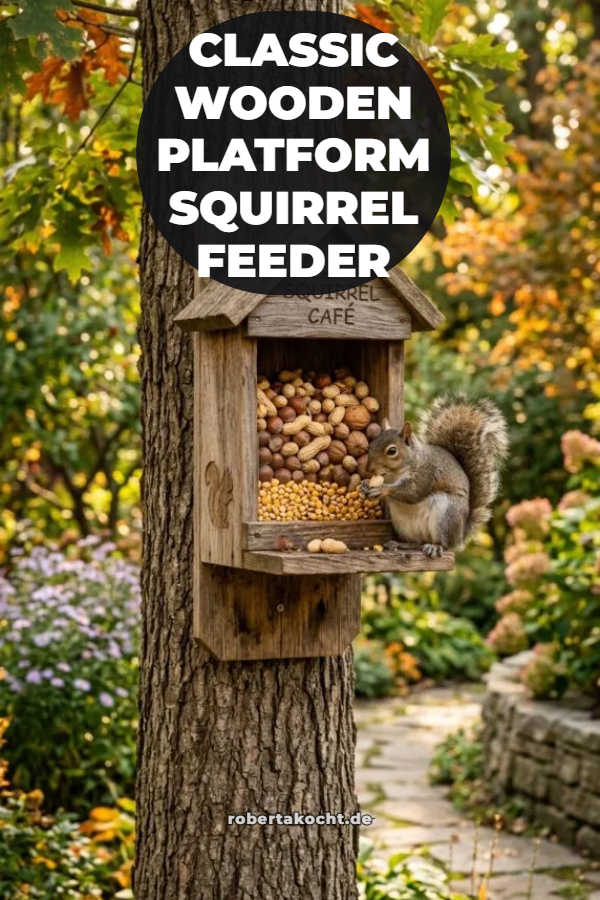
1. Classic Wooden Platform Squirrel Feeder
Materials Used: Scrap wood, nails/screws, sandpaper, wood glue, optional wood stain.
How to Make:
A classic platform feeder is one of the easiest and most effective squirrel feeders. Start by cutting a flat wooden base about 8–12 inches wide. Attach four small wooden legs or side rails to keep food in place. Sand all edges to prevent splinters. If you want a polished look, apply a natural wood stain for weather protection. Place the feeder on a tree trunk or mount it on a fence post.
Pinterest Style Pattern:
This design focuses on rustic simplicity. Think farmhouse-style outdoor décor—natural wood texture, minimal paint, and clean structure. It blends beautifully with garden environments and wooden fences.
Why It Works:
Squirrels prefer open feeding spaces where they can easily grab nuts and stay alert for predators. The flat design mimics natural feeding surfaces like tree branches.
Extra Tip:
Place corn cobs or peanuts in a straight line for a visually pleasing Pinterest-style arrangement that attracts squirrels quickly.