Spread the love

Preschoolers are naturally curious, creative, and full of energy, which makes them the perfect age group to explore arts and crafts. Crafting not only helps develop their fine motor skills but also stimulates their creativity, teaches them to follow instructions, and enhances their ability to focus and complete projects. Plus, it’s a fantastic way to bond with your child while creating lasting memories.

In this blog post, we’ll explore 10 DIY crafts for preschool kids that are simple, fun, and engaging. These craft ideas use materials you likely already have at home, making them easy to set up with minimal hassle. Whether you want to encourage your child’s creativity or simply need an activity to keep them entertained, these crafts will offer hours of enjoyment and learning.
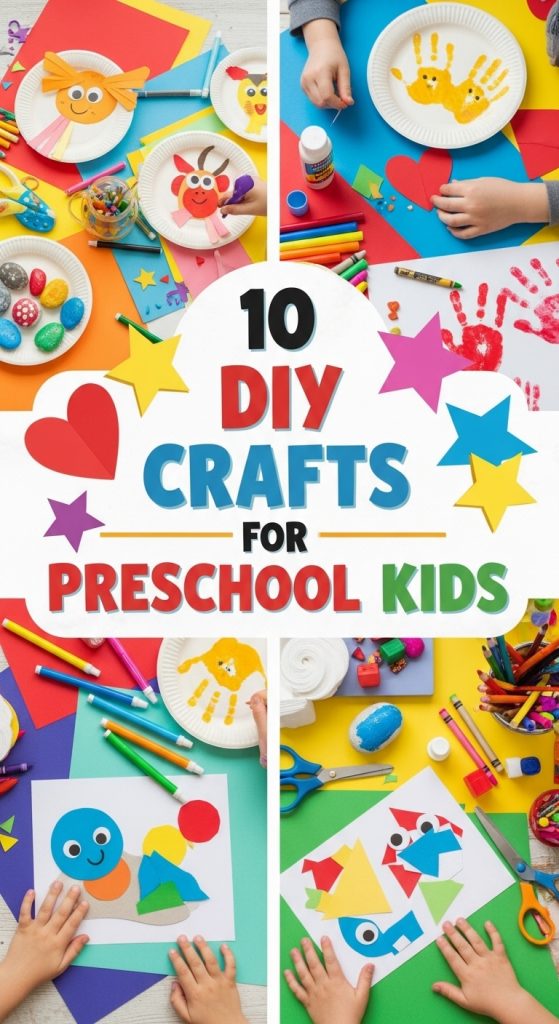

1. Paper Plate Animals

Why It Works:
Paper plates are an inexpensive and versatile craft material that can be transformed into a variety of fun projects. This craft is perfect for preschoolers because it encourages imaginative thinking and fine motor skills through cutting, coloring, and gluing.

Design Tips:

  • Materials: Paper plates, crayons, markers, glue, construction paper, googly eyes, and craft scissors.
  • Steps:
    1. Start by painting or coloring the paper plate to create the base of the animal (e.g., brown for a bear, yellow for a lion).
    2. Cut out ears, eyes, noses, and mouths from construction paper, and glue them to the plate.
    3. Add googly eyes or draw the eyes and other facial features with markers.
    4. Attach additional features like a tail or wings (for birds or butterflies) using construction paper.

Why It’s Perfect:
This craft allows preschoolers to explore animals and shapes in a hands-on way while developing their motor skills. It’s simple, fun, and can be adapted to almost any animal your child loves.


2. Salt Dough Handprints

Why It Works:
Salt dough handprints make for a sentimental craft that both you and your preschooler will cherish for years to come. The process of rolling, molding, and imprinting teaches them about texture and shapes.

Design Tips:

  • Materials: Salt dough (1 cup flour, 1/2 cup salt, 1/4 cup water), rolling pin, cookie cutters (optional), paints.
  • Steps:
    1. Mix the flour, salt, and water to create the dough. Roll it out to about 1/4 inch thickness.
    2. Help your child press their hand into the dough to make an imprint.
    3. You can use cookie cutters to add extra shapes (hearts, stars, etc.) around the handprint.
    4. Bake the handprint at 250°F for about 2 hours or until it hardens completely.
    5. Once cooled, your child can paint the handprint and decorate it with their favorite colors.

Why It’s Perfect:
This craft creates a timeless keepsake that celebrates your child’s growth. The process of shaping the dough and the final product both hold sentimental value and make great gifts for family members.


3. Egg Carton Caterpillars

Why It Works:
Egg cartons are another recyclable craft material that is perfect for creating a fun, imaginative project. This caterpillar craft is a simple and colorful way to help kids understand the life cycle of insects.

Design Tips:

  • Materials: Egg carton, paint, googly eyes, pipe cleaners, glue, markers.
  • Steps:
    1. Cut the egg carton into individual sections to form the segments of the caterpillar’s body.
    2. Paint each section in bright, vibrant colors.
    3. Glue googly eyes onto one section for the caterpillar’s face.
    4. Use pipe cleaners to create antennae by gluing them to the top of the first segment.
    5. Once dry, children can decorate the caterpillar with additional details using markers.

Why It’s Perfect:
This craft introduces children to basic concepts of animals and encourages color recognition, pattern-making, and creativity. It’s a great way to teach kids about the natural world in an engaging way.


4. Rock Painting

Why It Works:
Rock painting is a simple, creative, and nature-based craft that encourages children to explore their imagination. Rocks are a great canvas for young children to paint on, and the results can be displayed around the house or outside.

Design Tips:

  • Materials: Small smooth rocks, acrylic paints, paintbrushes, markers.
  • Steps:
    1. Find smooth, flat rocks from your garden or a local park.
    2. Wash and dry the rocks before starting.
    3. Let your child paint on the rocks, creating animals, flowers, or fun designs.
    4. Once dry, you can add details with markers (like faces or patterns).
    5. Seal the painted rocks with a clear varnish for a glossy finish.

Why It’s Perfect:
Rock painting is an ideal outdoor craft, and it helps preschoolers develop their fine motor skills and creativity. The rocks can also be used as decorative items or hidden for a fun rock hunt with family and friends.


5. Handprint Flowers

Why It Works:
This craft uses your child’s handprints to create colorful flowers. It’s a great way to combine art and nature while creating a keepsake that captures their growing hands year after year.

Design Tips:

  • Materials: Paper, paint, markers, scissors, glue.
  • Steps:
    1. Paint your child’s hand with a bright color (such as yellow, pink, or red).
    2. Press their hand onto a piece of paper to create the flower petals.
    3. Once the handprint is dry, help your child draw or cut out a stem and leaves using green paper or markers.
    4. Optional: Add additional decorations like glitter or stickers to make the flowers pop.

Why It’s Perfect:
Handprint flowers are not only fun to make but also provide a sentimental reminder of your child’s early years. This craft is a great way to create colorful decor or cards for family and friends.


6. Paper Roll Octopus

Why It Works:
An octopus made from a toilet paper roll is a fantastic craft that gives new life to a simple household item. It’s an opportunity for your child to practice cutting, gluing, and painting while learning about marine life.

Design Tips:

  • Materials: Toilet paper roll, scissors, paint, googly eyes, pipe cleaners, glue.
  • Steps:
    1. Paint the toilet paper roll to create the body of the octopus.
    2. Cut 8 strips of paper or pipe cleaners to form the tentacles, and glue them to the bottom of the roll.
    3. Add googly eyes and a mouth to the top for the octopus’s face.
    4. Allow everything to dry before displaying the octopus in a favorite corner.

Why It’s Perfect:
This craft introduces preschoolers to ocean creatures while allowing them to experiment with cutting, coloring, and assembling materials. It’s simple yet imaginative, and the results are fun and educational.


7. Paper Plate Sun Catchers

Why It Works:
Sun catchers are beautiful crafts that will brighten any window. This activity encourages creativity while teaching about colors and light.

Design Tips:

  • Materials: Paper plates, tissue paper, scissors, glue, string.
  • Steps:
    1. Cut the center out of the paper plate to create a frame.
    2. Tear the tissue paper into small pieces, and glue them onto the inside of the frame.
    3. Add colorful designs or patterns with the tissue paper for a rainbow effect.
    4. Once dry, attach a string to the top of the paper plate frame so it can hang in a window.

Why It’s Perfect:
Paper plate sun catchers brighten up a room and offer a sensory experience for children as they work with colorful tissue paper. It’s a simple craft that adds beauty and creativity to your home.


8. Button Art

Why It Works:
Button art is a wonderful way to use old buttons while helping your child develop their fine motor skills. This craft is simple and allows for lots of creative freedom in terms of shapes and designs.

Design Tips:

  • Materials: Old buttons, construction paper, glue, markers.
  • Steps:
    1. Draw a simple picture on the construction paper, such as a tree, house, or flower.
    2. Help your child glue buttons onto the picture to fill in the design (e.g., buttons for flowers, the leaves of a tree, or windows on a house).
    3. Add additional details with markers to complete the artwork.

Why It’s Perfect:
Button art is both creative and sustainable, turning old buttons into a fun and colorful project. It helps children learn about patterns, shapes, and colors while creating a visually appealing masterpiece.


9. Nature Collage

Why It Works:
A nature collage allows kids to get outside and gather materials from nature while also engaging their creativity. It’s a wonderful way to teach about the environment while doing a hands-on craft.

Design Tips:

  • Materials: Leaves, twigs, flowers, pebbles, glue, cardboard.
  • Steps:
    1. Go outside with your child to collect natural items like leaves, flowers, twigs, and pebbles.
    2. Help your child glue these items onto a piece of cardboard to create a collage.
    3. You can arrange the items in patterns, shapes, or create a landscape or scene.

Why It’s Perfect:
This craft encourages kids to explore nature and use their creativity to create something unique. It’s a sensory and educational activity that is perfect for all seasons.


10. Painted Rock Animals

Why It Works:
Painting rocks is a fun and easy craft that lets kids get creative while learning about animals and nature. These painted rock animals can be used as toys, garden decorations, or keepsakes.

Design Tips:

  • Materials: Smooth rocks, acrylic paint, paintbrushes, markers, googly eyes.
  • Steps:
    1. Paint the rocks with a base color to create the animal’s body.
    2. Add details such as eyes, ears, and fur patterns.
    3. Use markers to add facial features or extra designs.
    4. Allow the rocks to dry, and you can use them as figurines or decorations.

Why It’s Perfect:
Painting rock animals is an easy and inexpensive way for preschoolers to explore their creativity while learning about animals. The end result is a fun, tangible object they can display or play with.


Conclusion

Crafting is an excellent way to engage preschoolers, fostering their creativity, improving motor skills, and encouraging exploration. These 10 DIY crafts for preschool kids offer a wide range of fun and easy projects that can be done with materials you already have at home. Whether it’s making paper plate animals, creating handprint flowers, or painting rocks, these crafts are sure to provide hours of entertainment and learning.

By incorporating arts and crafts into your child’s routine, you’re helping them develop important skills while also giving them the opportunity to express themselves. These projects are not only fun but also provide an opportunity to bond and create memories that will last a lifetime.


Spread the love

By admin

Leave a Reply

Your email address will not be published. Required fields are marked *