2. Use Earthy Retro Color Palettes
Color plays a major role in achieving a true mid-century revival atmosphere. Earthy retro tones create warmth, comfort, and vintage personality without overwhelming the room. Popular mid-century colors include mustard yellow, burnt orange, olive green, terracotta, camel brown, cream, and deep teal.
These shades work beautifully because they reflect nature while still adding bold character. Unlike ultra-bright modern palettes, earthy retro colors feel grounded and relaxing. They instantly create a cozy environment that looks stylish in Pinterest-inspired interiors.
One of the easiest ways to introduce these colors is through textiles. Add mustard throw pillows to a beige sofa or place an olive green blanket over a neutral chair. Small color additions can dramatically change the mood of a room without requiring a full redesign.
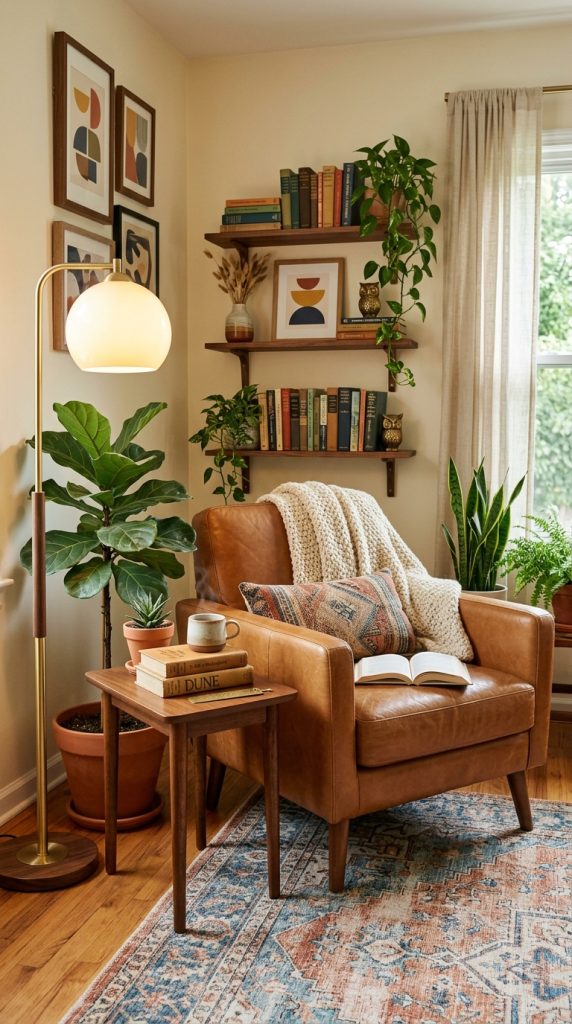
Another option is painting an accent wall. A muted terracotta or olive green wall creates depth while complementing walnut furniture and brass accents. Keep the remaining walls neutral to maintain balance.
You can also incorporate retro colors through artwork, rugs, ceramics, and curtains. Geometric patterns in earthy shades especially enhance the mid-century aesthetic. The goal is to layer warm tones in a subtle, intentional way.
If you prefer a softer version of this trend, stick to cream and warm beige as your base palette and add only one or two retro colors as accents. This creates a more modern interpretation of mid-century revival design.
Earthy retro palettes make interiors feel welcoming, nostalgic, and effortlessly stylish, which is why they remain one of the biggest trends in modern home decor.