8. Use Geometric Rugs to Define Spaces
Geometric rugs are a powerful design tool in mid-century interiors because they introduce pattern while helping define individual spaces within a room. Their bold shapes and retro-inspired patterns instantly enhance the vintage-modern aesthetic.
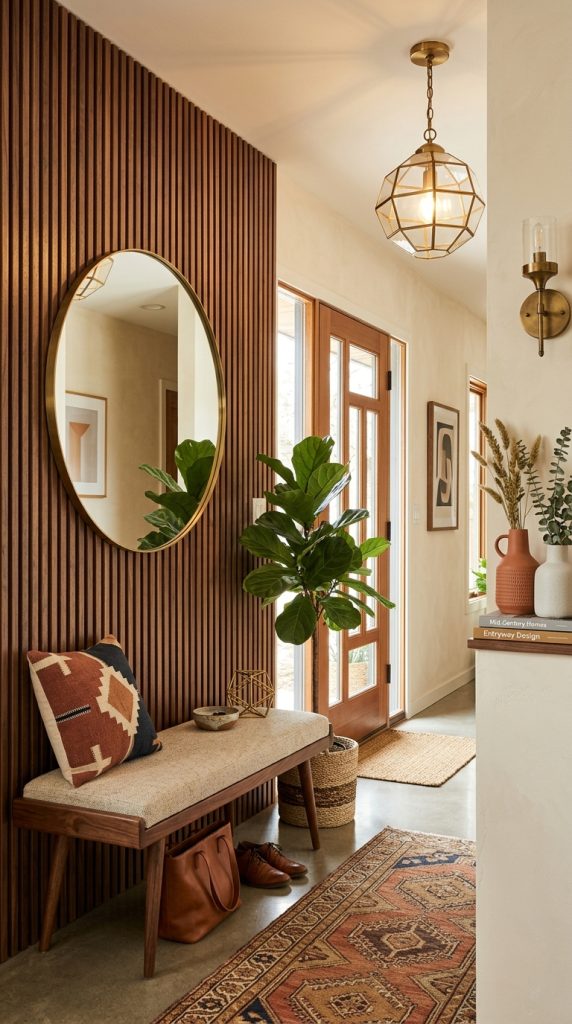
Mid-century geometric rugs often feature repeating lines, abstract forms, diamonds, circles, or asymmetrical patterns in earthy tones. These designs add personality without feeling overwhelming.
A rug can completely anchor a seating area and make furniture arrangements feel intentional. Place a large geometric rug beneath your sofa and coffee table to visually connect the entire room.
In dining areas, geometric rugs add warmth and softness while enhancing the retro atmosphere. Choose durable low-pile options for practicality.
Bedroom spaces also benefit from geometric patterns. A rug beneath the bed creates texture and makes the room feel layered and comfortable.
When selecting colors, stick to warm neutral palettes mixed with subtle retro tones. Avoid overly bright modern patterns that clash with the mid-century aesthetic.
Geometric rugs work especially well with minimalist furniture because they introduce movement and visual interest. They prevent rooms from looking flat while still maintaining balance.
For a Pinterest-inspired look, pair geometric rugs with walnut furniture, brass lighting, linen textiles, and abstract artwork. This combination creates a cohesive and professionally styled interior.
A well-chosen rug can completely elevate your space and become one of the most impactful design elements in your mid-century revival home.