7. Add Indoor Plants for Organic Warmth
Indoor plants are essential in mid-century revival spaces because they bring softness, freshness, and natural energy into the home. Mid-century interiors often combine structured furniture with organic elements, making plants the perfect balancing feature.
Large leafy plants such as fiddle leaf figs, monsteras, snake plants, and rubber trees work especially well in this aesthetic. Their sculptural shapes complement the clean lines of mid-century furniture beautifully.
Use ceramic planters, wooden stands, or woven baskets to enhance the retro-modern look. Mid-century plant stands with tapered wooden legs are particularly iconic and instantly recognizable.
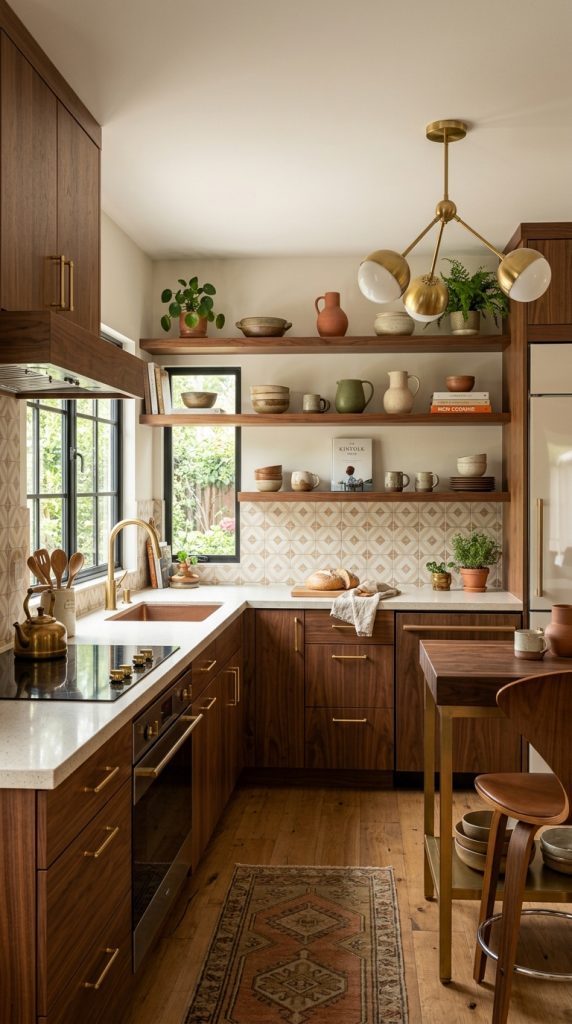
Plants can also help fill empty corners naturally without adding clutter. A tall plant beside a walnut credenza or reading chair creates visual balance and warmth.
Another benefit of indoor plants is texture. The contrast between smooth wood furniture and organic greenery makes interiors feel more layered and alive.
If you have limited space, smaller tabletop plants can still make a major impact. Style them on floating shelves, side tables, or windowsills alongside books and ceramics.
The key is not overcrowding the room. Mid-century design embraces simplicity, so a few thoughtfully placed plants create a stronger effect than excessive greenery.
Indoor plants help transform minimalist spaces into welcoming environments. They add movement, color, and natural beauty while perfectly complementing the timeless appeal of mid-century revival decor.